Fire Emblem Shadows
- 4.6
- Rating
- 500.00K
- Installs
- Free
- Price

 Analysis by App-foxy
Fire Emblem Shadows is a free strategy game from Nintendo Co., Ltd. that immediately sets a suspicious mood with its short store summary: “Trust no one.” I spent time with it expecting the familiar Fire Emblem mix of careful decisions and character-focused tension, but this entry places extra weight on uncertainty. That changes the way I approach even simple choices. I am not only asking which move is strongest; I am also considering whether the situation is presenting the information I need in a reliable way.
That makes it an interesting recommendation for players who enjoy thinking before acting. It is less suitable if you want a relaxed game that explains every consequence clearly or lets you solve encounters through quick reactions. The game is listed as a strategy title, carries an Everyone 10+ rating, and is available at no upfront cost. Those points make it easy to try, but the real question is whether its particular kind of decision-making gives you enough value to keep returning.
How Fire Emblem Shadows feels to play
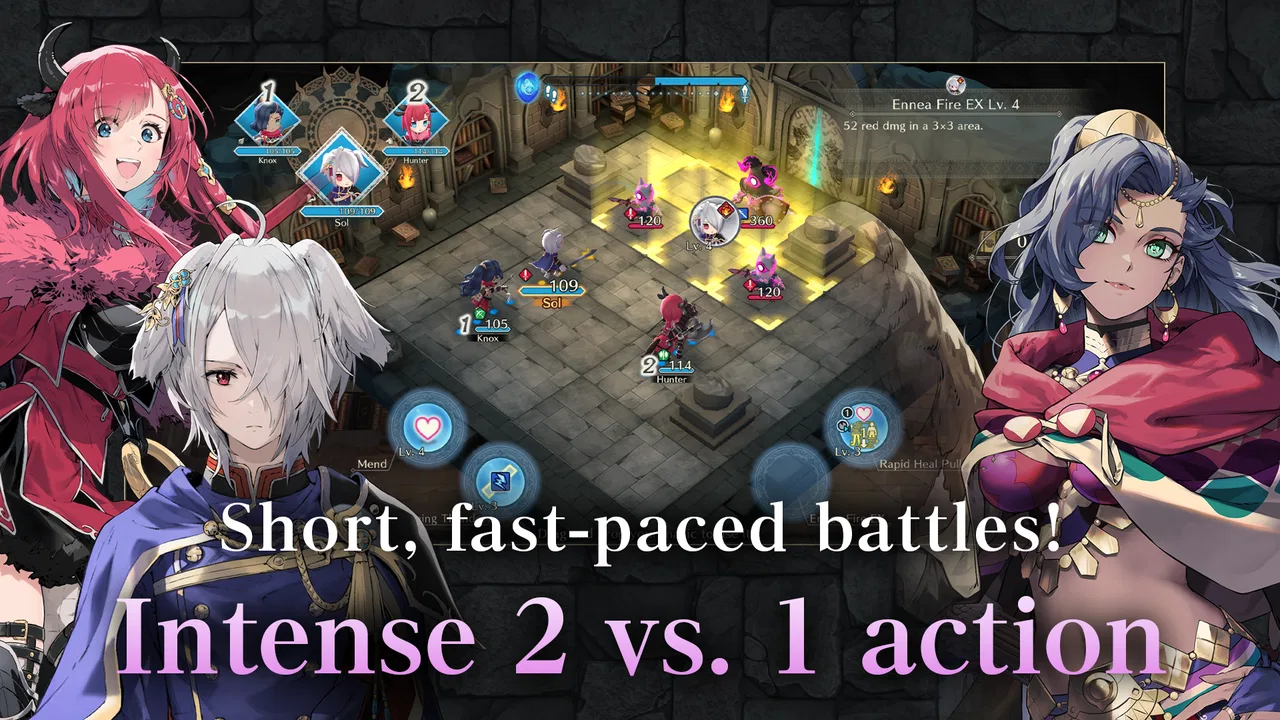
The strongest part of my experience was the pressure created by incomplete confidence. In a conventional tactical game, I can usually build a plan around visible information: position a unit, protect a weak character, and calculate the likely result. Here, the central idea encourages a more cautious rhythm. I found myself treating every commitment as something that needed a second look, especially when a seemingly safe choice could affect what happened next.
You May Also Like

 Blood Strike: 2.5 Anniversary
Blood Strike’s Loadouts Turn Every Drop Into a Tactical Gamble
A close look at Blood Strike’s custom loadouts: how fast access to signature weapons reshapes its battle royale rhythm, rewards preparation, and narrows the gap between fights.

 Pandora - Music & Podcasts
Pandora’s Music Is Easy to Start, but Harder to Recover
Pandora’s strength is its low-effort path from a seed to a station. Its weak spot is how much confidence it asks you to place in connection, setup, and quiet recovery.

 8 Ball Pool
 Is Built on Rivalries, Rematches, and Routine
A close look at the rivalries, rematches, shared routines, and unanswered safety questions that turn a quick pool match into a persistent mobile community.

 Samsung Music
’s Quiet Strength Is Playing What You Already Own
Its reach comes less from spectacle than from dependable access to a personal library. That simplicity is both the app’s strongest retention engine and its ceiling.

 AccuWeather: Weather Radar
AccuWeather Review: A Quick, Clear Forecast for Everyday Decisions
For everyday plans, the best forecast is the one you can understand quickly. AccuWeather makes rain timing, radar, and local conditions easy to act on, with a few trade-offs.

 Hill Climb Racing
Why Hill Climb Racing Still Turns Crashes Into One More Run
A tiny car, a bumpy hill and one more upgrade: Hill Climb Racing keeps resurfacing because its simple chaos makes every near-miss feel personal.
More From Our News Desk



That approach makes the game feel different from a simple puzzle with one correct solution. I was often weighing risk rather than searching for a perfect answer. A conservative move might preserve my options, while an aggressive one could produce a faster result but leave me exposed. This is the kind of tension that rewards patience, and it gives the strategy category a more psychological edge than a standard board-like battle.
I also appreciated how the premise changes the meaning of failure. Losing a position does not simply tell me that I selected the wrong square. It can make me reconsider how I interpreted the situation in the first place. That distinction matters because it encourages learning through judgment, not only through memorizing patterns. Players who like replaying a scenario with a revised plan will probably find more here than players who want a straightforward power curve.
Useful habits for new players
My first practical tip is to avoid spending every option as soon as it appears. When the game asks you to make a meaningful decision, keeping one alternative available can be more valuable than taking a small immediate advantage. I found that preserving flexibility helped me recover from uncertain situations and reduced the feeling that one early mistake had ruined the entire attempt.
A second useful habit is to separate what you know from what you assume. The game’s atmosphere makes that distinction important. I began mentally sorting information into confirmed circumstances, likely outcomes, and guesses based on appearances. That simple habit improved my decisions more than rushing to select the most powerful-looking action. It is also a good way to understand why some encounters feel tense even when the visible board seems manageable.
Finally, I recommend playing in short, focused sessions at first. The game’s strategic pressure is easier to appreciate when I am paying attention to the chain of decisions rather than trying to push through while distracted. A quick session during a commute or a break can work well, but I would not treat it as background entertainment. If I stop watching the details, the game becomes much less satisfying.
Where it fits beside other strategy games
Compared with a traditional Fire Emblem experience, this game’s appeal is less about building a large, familiar campaign routine and more about the tension surrounding trust and interpretation. Players who enjoy character progression, long-form storytelling, and carefully planned battles may find the usual series entries more immediately comfortable. Those games can offer a clearer sense of ownership over a roster and a more predictable strategic framework.
Compared with casual mobile strategy games, Fire Emblem Shadows feels more deliberate. It is not the sort of experience I would choose when I want constant rewards with minimal attention. Many mobile alternatives are designed around quick upgrades, repeated tasks, or simple battles that can be understood within seconds. This title asks me to slow down and question the situation, which is a genuine strength for thoughtful players but a real barrier for anyone seeking instant accessibility.
It also differs from pure puzzle games. A puzzle usually rewards finding the intended solution, while this game’s appeal comes from managing uncertainty and accepting that a safe-looking route may not remain safe. That makes the experience more replayable for me, although it can also feel less tidy. If you prefer a clean answer after every attempt, another strategy game may be a better fit.
Cost, value, and the practical tradeoffs
The basic entry point is free, so I could try Fire Emblem Shadows without paying before deciding whether its style suited me. That is important because the game’s central appeal is not universal. A free starting point gives curious strategy fans a chance to test the pacing, atmosphere, and decision-making instead of committing to a purchase based only on the Fire Emblem name.
There are in-app purchases ranging from $0.79 to $77.99 per item. I would therefore approach the game as free access with optional spending rather than as a completely cost-free experience. The sensible way to judge its value is to begin without buying anything, learn how much of the experience works for you, and only then decide whether an optional purchase is worth considering. I would not spend simply because progress feels slower during an early session.
This pricing structure also changes who should recommend it to younger players. The age rating is Everyone 10+, but parents may still want to discuss purchases before handing over a device. The rating describes the intended audience; it does not replace a family decision about spending. I would personally keep purchase decisions deliberate, especially in a strategy game where impatience can make optional spending feel more tempting.
In terms of delivered value, the game earns its place when I want a strategy experience that makes me question information and manage risk. It offers less value if I am looking for a large amount of straightforward content, a purely relaxing loop, or a game that can be enjoyed without concentrating. Free access removes the biggest barrier to testing it, but it does not remove the need to decide whether this specific design suits my habits.
A realistic everyday use case
Imagine having fifteen minutes before an appointment. I would choose Fire Emblem Shadows if I wanted a focused mental exercise rather than a passive distraction. I could begin with a clear goal, examine the situation, and make a few careful choices while keeping track of what I truly know. That kind of session feels productive because the game asks me to reason, not merely tap through rewards.
On the other hand, if I were tired after work and wanted something effortless, I would probably choose a simpler mobile game. The uncertainty that makes this title interesting can become tiring when I am not in the mood to concentrate. That is an important tradeoff: its strongest feature is also the reason it is not ideal for every moment of the day.
Limitations worth considering
The “trust no one” premise can create friction. Suspicion is engaging when I have enough information to form a theory, but it can feel frustrating if I want immediate clarity. I had to accept that not every confusing moment was a problem to solve instantly. Some players will enjoy that ambiguity; others may see it as unnecessary resistance between them and the strategy they came to play.
The game can also punish impulsive decision-making in a way that feels harsher than more casual mobile titles. That is not automatically a flaw, but it means the learning curve depends on patience. I would not recommend it to someone who dislikes revisiting decisions or who expects every loss to provide an obvious explanation.
Another tradeoff is the tension between the recognizable Fire Emblem identity and the game’s more specialized focus. Fans arriving for the broader series formula should keep their expectations flexible. The title may appeal most when approached as its own strategy experience rather than as a direct substitute for every other game in the franchise.
Version 1.2.0 is the current version, and the game has reached over 500 thousand installs with an average rating of 4.6 from roughly twelve thousand ratings. Those figures suggest that the game has attracted a meaningful audience and generally positive reactions, but they do not replace personal testing. A high average cannot tell me whether I will enjoy uncertainty, and a large install base cannot make an unsuitable style feel comfortable.
Who will get the most from it?
I think the best audience is made up of players who enjoy tactical choices, hidden motives, and situations where caution matters as much as strength. If you like discussing possible outcomes with yourself, replaying a decision to see what you missed, or treating a game as a test of judgment, this is a strong candidate. The strategy label is accurate, but the experience is most compelling when you enjoy the mental pressure behind the choices.
It is also a good option for Fire Emblem fans who want something that does not simply repeat the most familiar routine. The Nintendo connection gives it a recognizable foundation, while the distrust-focused premise encourages a different way of thinking. I would especially suggest it to someone who has already played more conventional tactical games and wants a mobile experience with a more unsettling decision-making style.
I would tell several groups to skip it, at least initially. Players who want quick arcade action will likely find the pace too considered. People who dislike ambiguity may become annoyed rather than intrigued. Anyone trying to avoid optional spending should begin carefully and make sure the free experience alone feels worthwhile before considering any purchase. And if your main reason for downloading is the expectation of a large traditional Fire Emblem campaign, another entry may better match that goal.
My recommendation
My recommendation is to try Fire Emblem Shadows because the free entry point makes experimentation reasonable, but to judge it by its decision-making rather than by its name. The best value here comes from enjoying uncertainty, not from rushing toward every available reward. If the idea of questioning appearances sounds exciting, the game can provide a distinctive strategy experience that fits well into focused mobile sessions.
I would not call it a universal recommendation. Its tension can feel demanding, and the optional purchase range means I would keep spending under control until I had established that the game genuinely belonged in my routine. Players looking for clarity, speed, or a conventional tactical campaign should choose a different option. For everyone else, especially those who enjoy careful risk management and the uneasy feeling that a safe answer may not be safe at all, Fire Emblem Shadows is worth a serious trial.
After playing it, I came away with a clear impression: this is a game about judgment before it is a game about momentum. Fire Emblem Shadows works best when I slow down, question what I am seeing, and accept that a good decision may be the one that preserves future choices rather than producing the biggest immediate result. That makes it a thoughtful free strategy game, provided its uncertainty feels like a challenge you want to engage with rather than an obstacle you want removed.
FAQs for Fire Emblem Shadows
01What is the main objective of Fire Emblem Shadows?
Fire Emblem Shadows is a tactical role-playing game where players take command of a group of heroes. The main objective is to strategically navigate through various maps, defeat enemies, and unfold the story of the land you're trying to save. Each character has unique abilities, and managing their strengths is key to success.
02Is Fire Emblem Shadows suitable for beginners?
Yes, Fire Emblem Shadows is designed to accommodate both newcomers and veterans of the series. It offers different difficulty levels, allowing players to choose a setting that matches their experience. Tutorials and tips are available to help new players understand the mechanics and strategies required for success.
03Are there in-app purchases in Fire Emblem Shadows?
While Fire Emblem Shadows can be enjoyed without spending money, there are optional in-app purchases available. These purchases can enhance the gaming experience by providing items, characters, or other benefits. However, they are not necessary to complete the game, ensuring a balanced experience for all players.
04Does Fire Emblem Shadows require an internet connection?
Fire Emblem Shadows primarily operates offline, allowing players to enjoy the game without an internet connection. However, certain features, such as updates, downloadable content, or online leaderboards, may require connectivity. It's advisable to connect periodically to ensure the game is up to date.
05How does Fire Emblem Shadows handle character progression?
Character progression in Fire Emblem Shadows is achieved through experience points gained in battles. Characters level up, enhancing their stats and abilities. Players can also equip items and weapons to further customize their heroes. This system allows for strategic development, making each character unique in their role on the battlefield.
Pros
- Engaging tactical gameplay mechanics.
- Rich storyline with deep character development.
- Beautiful graphics and animations.
- Varied difficulty levels for all players.
- Rewarding progression and customization.
Cons
- Requires significant time investment.
- High battery consumption.
- Occasional in-app purchase prompts.
- Complexity may deter casual players.
- Large download size.

Fire Emblem Shadows
Gallery